- Part 2 of 3
The Asset Income Protocol
Examine the 3-step protocol and empirical facts behind building an asset in South Africa's R5 Trillion sector that pays recurring income.
You Are Working Hard, But The Sand Keeps Shifting Beneath Your Feet
If you wake up every morning, put in 8 to 12 hours of hard graft, and still feel like you are barely inching forward, internalise this: You are not the problem.
Like so many hard working South Africans, you are doing everything right, but fighting an economic system designed around active labour and short-term gains.
Every month, you build what I call a Financial Sandcastle. You trade your time and energy for a paycheck or client invoices. Your bank account looks healthy a few days after pay day, and then the Economic Tide rolls in.
Debit orders, your bond or rent, car payments, electricity, and groceries rush up the shore.
And then come those unforeseen freak waves – an unexpected dentist bill, a dead car battery, or urgent school expenses.
By the 3rd of the month, the tide has smoothed your hard work back into flat sand. Your account is stripped bare, and you are forced to start rebuidling the exact same sandcastle all over again to survive the next 30 days.

The Two Dangers Threatening Your Hard Work
It isn’t your imagination – building financial security in South Africa has recently become even harder due to two major forces:
The Cost-of-Living Crunch
Data from the Pietermaritzburg Economic Justice & Dignity Group (PMBEJD) reveals that basic household food baskets consistently outpace normal inflation.
Electricity tariffs have jumped by nearly 100% in recent years.
Meanwhile, the BankservAfrica Take-Home Pay Index confirms that real average salaries in South Africa have remained flat or decayed.
The result: You are paying more for less with less, every single year.
AI Disruption & The 4th Industrial Revolution
While government and corporate leaders promote the 4IR with promises of future tech jobs, the immediate reality on the ground is stark: AI and digital automation are systematically displacing administrative, customer service, and white-collar roles across South African corporations.
Young adults face the Catch-22 of “no experience, no job; no job, no experience.” Meanwhile, experienced workers see small businesses and corporates closing down or leaving the country, weighed down by economic decay and regulatory red tape.
Relying solely on a traditional salary, self-employment, or a local business is like building on the edge of a rising sea.
The Retirement Illusion & The 6% Myth
Some people believe the answer is getting a higher-paying job.
But an executive-level salary just builds a bigger sandcastle further up the beach. It’s bigger and nicer, but it is still made of sand. The moment an economic storm hits (in the form of a restructuring or downturn) that salary can wash away just as fast.
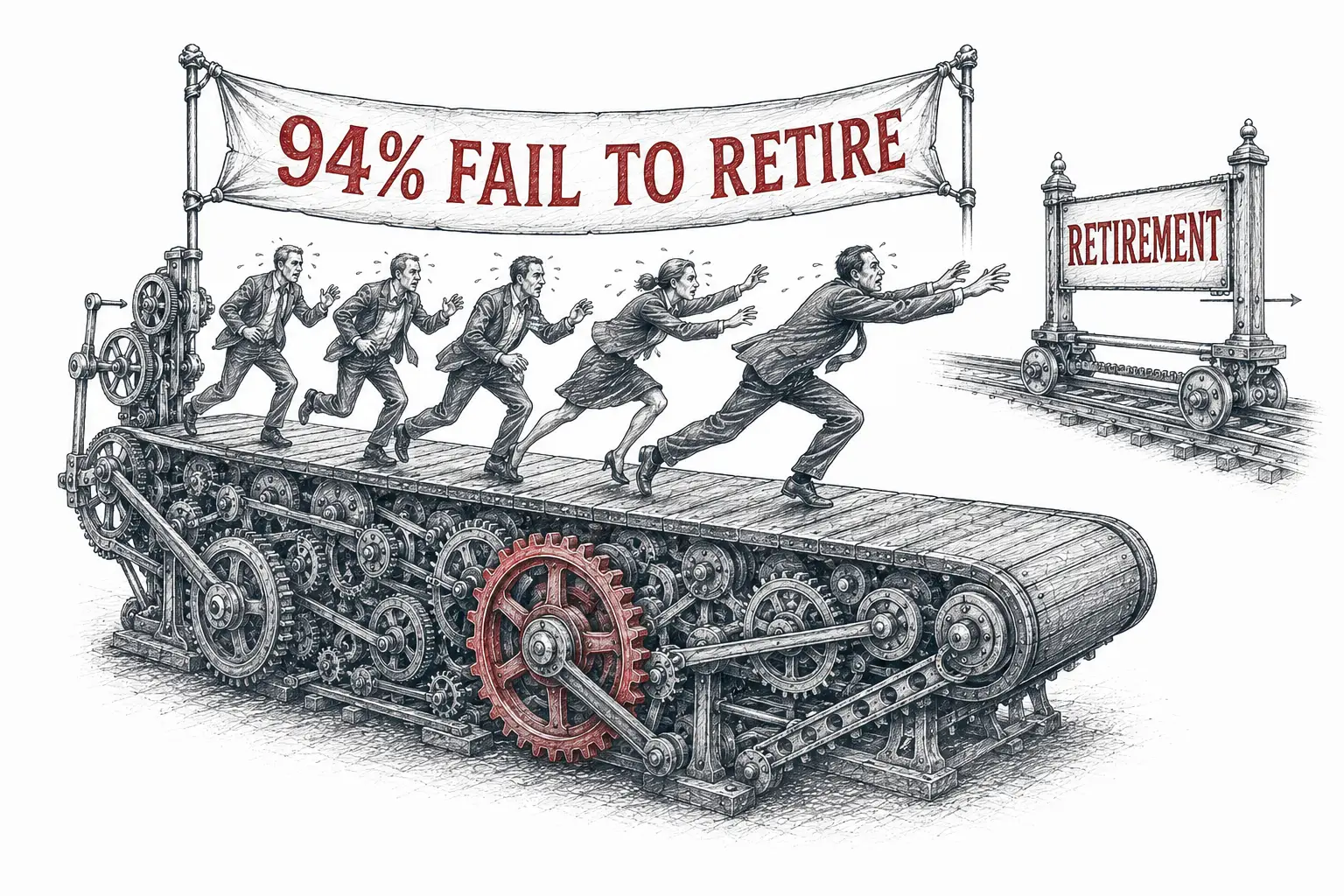
Official research from the National Treasury and the Old Mutual Savings and Investment Monitor reveals a sobering truth: Only 6% of South Africans can afford to retire comfortably.
That means 94% of our population reach age 65 facing a severe income deficit, dependent on family or state grants.
Many are hard-working people who put in 40 years of dedicated labour!
Granted, some people make poor money decisions, but we also know the reality for many. If you are choosing between putting food on the table for your children or investing for the future, you choose feeding your family every time.
The reality remains – the traditional career path fails 94 out of 100 people because active income leaves too much month at the end of the money.
Trapped on the Same Treadmill; A Good Life Built on Shifting Sand
My career in digital marketing has afforded me a lifestyle many South Africans can only dream of.
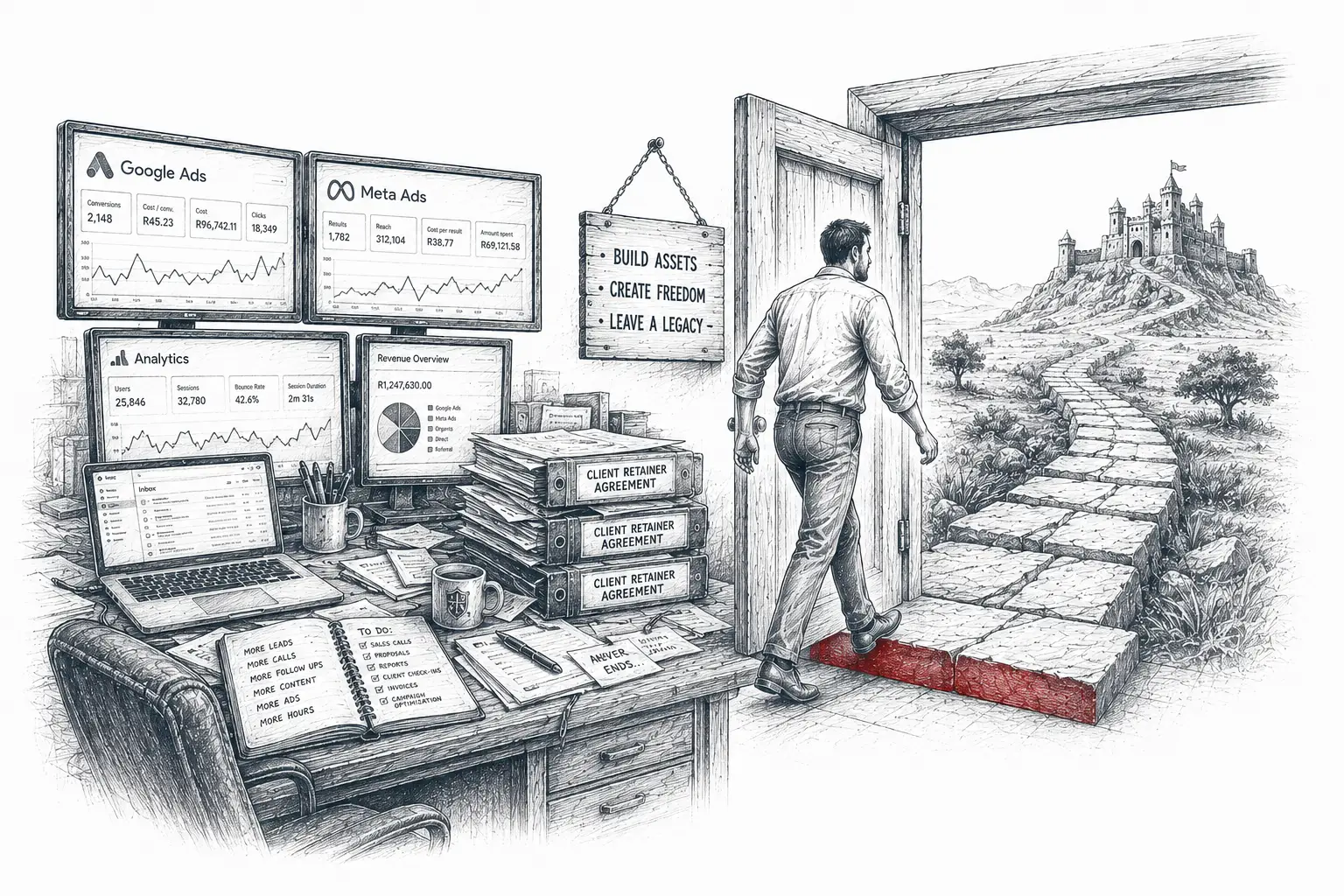
Operating from a home office, it brought flexibility, great clients, and unforgettable experiences. At one point, I spent an entire year vagabonding across around the world, visiting 10 countries – running my business from a laptop while exploring new places and earning a regular income.
It looked like success and total freedom. But beneath the surface, the underlying physics was fragile: my lifestyle was still 100% dependant on active income.
No matter where I was in the world, the machinery required my constant attention. If I shut my laptop, stopped managing client campaigns, or took my hands off the keyboard, the income stopped. I was still trading my health, energy, and finite time for money.
As I grew older, my perspective shifted. And then the pandemic arrived.
In a matter of weeks, that global crisis exposed the raw truth about active income. The client retainers I had spent nearly a decade building – my financial sandcastle – were severely damaged by the biggest Economic Storm of the century.
Living through that storm brought a deep, permanent realisation: lifestyle flexibility is an illusion if it isn’t backed by a permanent foundation.
I realised I needed to stop rebuilding sandcastles that wash away, and start constructing an asset that lasts – something built on unbreakable bedrock that continues to support my family regardless of what happens in the world.
And that realisation led me directly to the single most stable, storm-proof economic engine in South Africa.
The Bedrock Alternative: South Africa's Stable
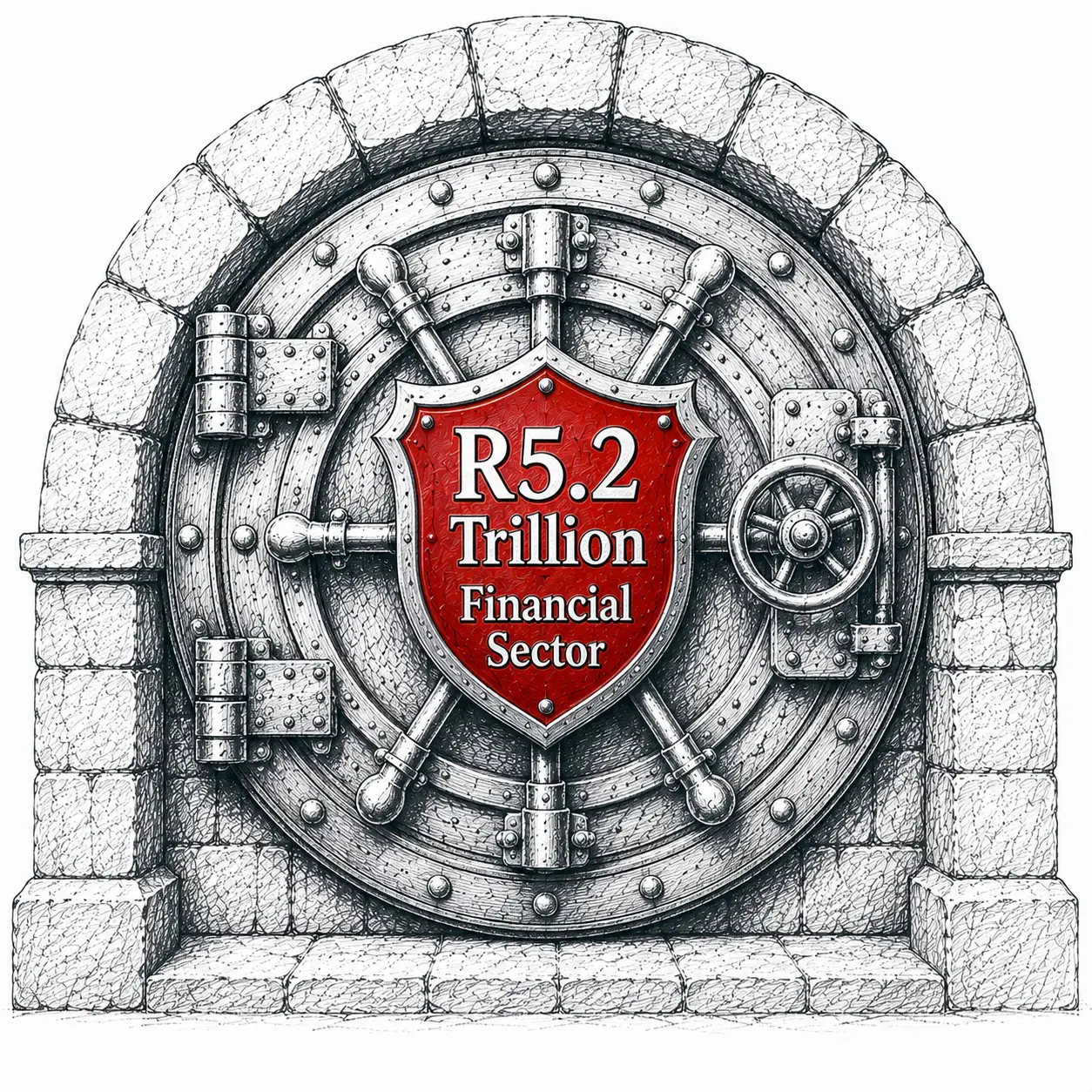
R5.2 Trillion Financial Sector
There is one sector in South Africa that holds its ground even when economic conditions worsen.
While retail and small businesses struggle, official data from the Association for Savings and Investment South Africa (ASISA) shows that South Africa’s Long-Term Insurance and Investment Industry manages over R5.2 Trillion in assets.
According to Stats SA, this sector generates over 23% of our nation’s entire Gross Domestic Product.
Why is this industry so resilient? Because South Africans never stop protecting their families. They pay their debit orders for funeral cover, medical assistance, legal protection, investments, and savings month after month, year after year – no matter what happens to the broader economy.
In the past, owning an income asset in this sector required millions in startup capital, financial degrees, and FSCA regulatory licenses.
But not anymore…
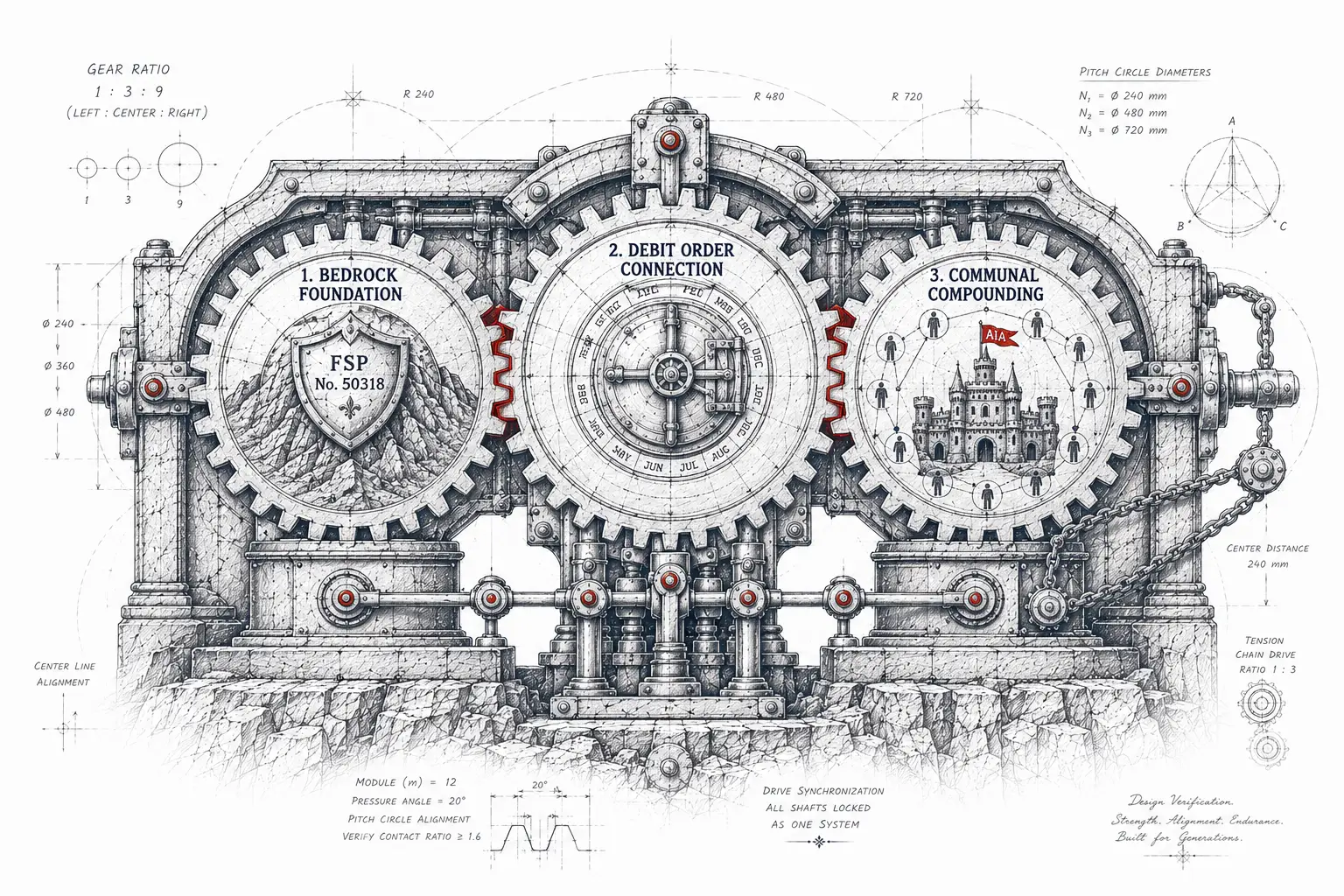
Your 3-Step Plan: The Asset Income Protocol
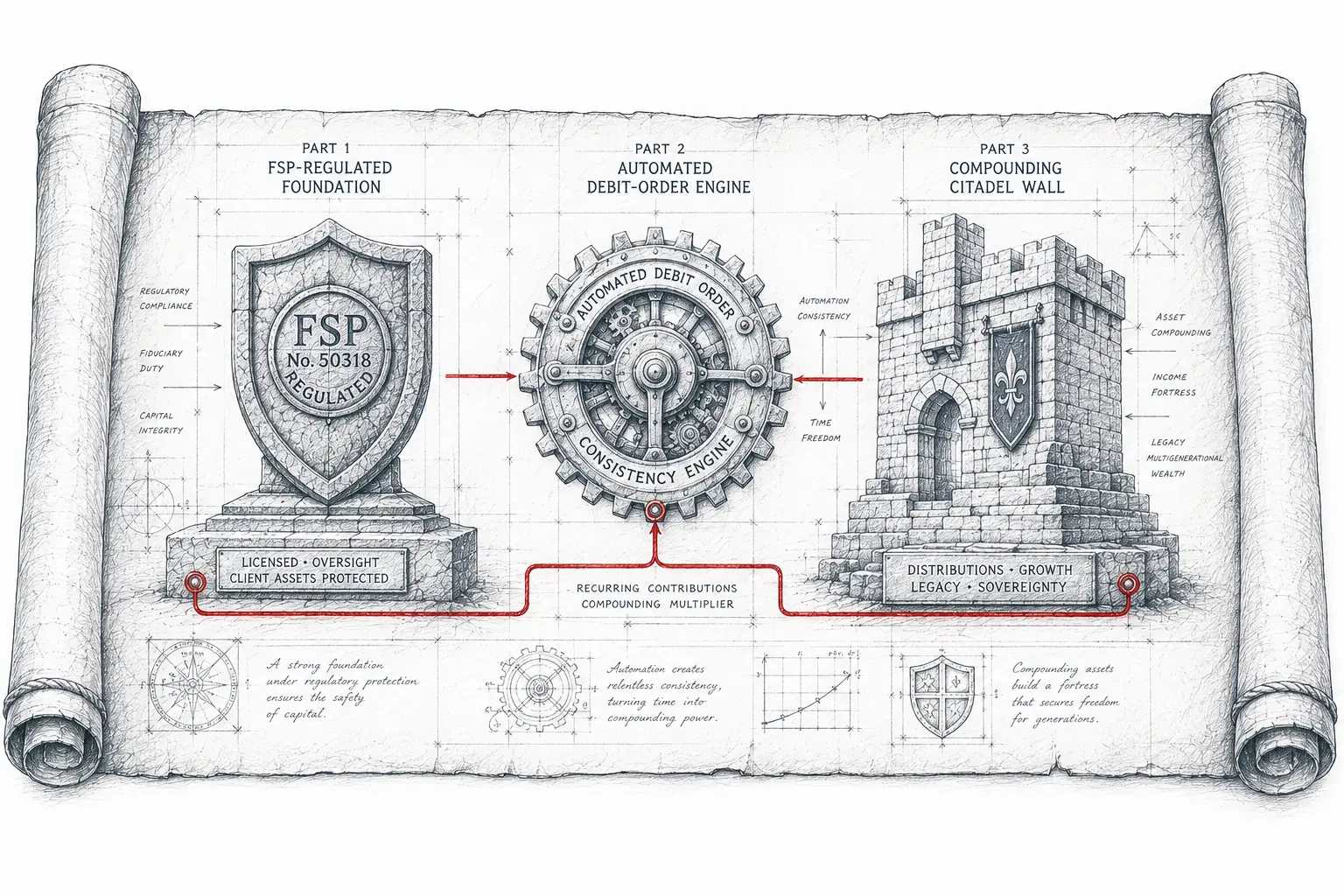
You don’t need to quit your job, take on debt, or risk your life savings. We step off the beach onto solid, regulated bedrock using a 3-step plan.
- Step 1
Bedrock Foundation (Zero-Debt Entry)
You plug into an established, 10-year-proven FSP-regulated platform (FSP No. 50318) as a lean sole proprietor for R349 a month.
The platform handles 100% of the legal, underwriting, compliance, and corporate liability.
You have zero business debt, zero inventory, and zero staff.
- Step 2
Debit Order Connection (Recurring Returns)
You spend 1 hour a day connecting South African families to this platform offering essential daily protection products, like medical, legal, funeral, savings.
Because these are paid via automated monthly debit orders, your monthly returns never reset to zero on the first of the month.
On top of that, you unlock immediate performance bounties in the form of cash checks from R1,000 to R22,000.
- Step 3
Communal Compounding (Ubuntu Growth)
You don't build alone. We operate under Ubuntu - building inside a non-competitive alliance where every stone you lay in your keep simultaneously strengthens your team's outer wall.
You learn alongside experienced mentors who have a direct interest in your success.

The 3-Tier Financial Progression Spectrum
We don’t promise overnight riches. You are guided through a clear, step-by-step evolution:
Level 1 - Financial Security (Breathing Room)
Unlocking immediate cash flow to stop the month-end panic, pay for groceries with dignity, cover surprise expenses, and clear high-interest debt.
Level 2 - Financial Independence (Autonomy)
Growing your monthly recurring returns until they replace your active salary or self-employment income, allowing you to own 100% of your day.
Level 3 - Financial Freedom & Legacy (Sovereignty)
Expanding your asset into a generational fortress that pays for comfortable living, family travel, and passes legally to your children when you are gone.
It's Time to Build Your Financial Fortress
You have a choice…
You can stay down on the shoreline, working 50 hours a week to build sandcastles that erode every 30 days, hoping that you will be part of the 6% who somehow survive.
Or you can step onto bedrock, dedicate 1 hour a day to building an asset that lasts, and construct a Financial Fortress that is built to withstand economic storms.
I am sharing the journey I am on, the tools I am using, and the lessons I am learning. I invite you to examine the blueprint for yourself.